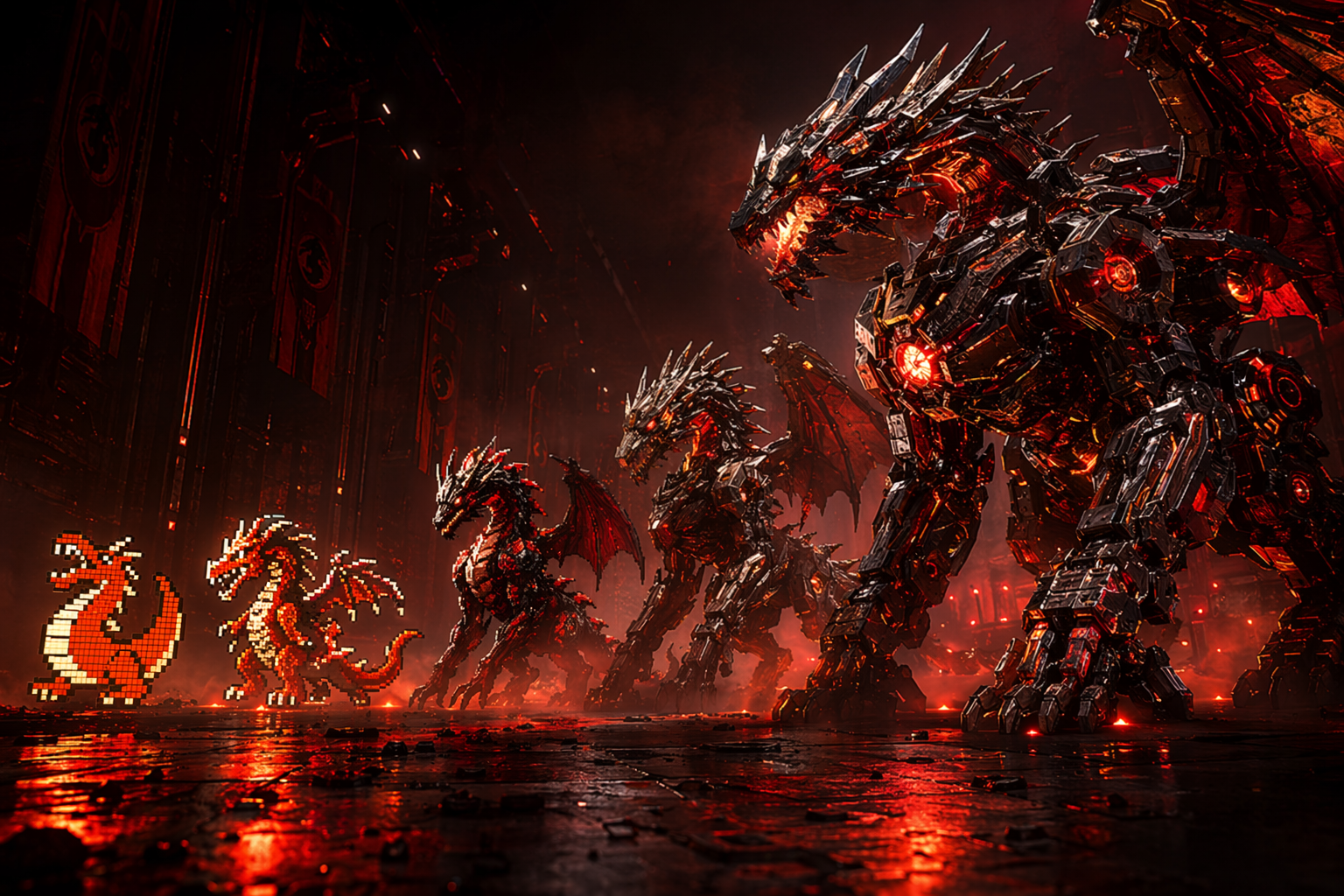
The Art of Boss Design
From pattern memorization to cinematic spectacles — the evolution of gaming's greatest challenges.
The Pattern Era
1980sEarly bosses were puzzles of pure pattern recognition. They moved in predictable loops, attacked at fixed intervals, and had one clear weakness. Victory came from observation and memorization — the player's brain was the only tool needed.
Bowser (Super Mario Bros.)
Run under or throw fireballs. The first boss millions of players ever defeated.
Dr. Wily (Mega Man)
Introduced the concept of boss weaknesses — rock-paper-scissors combat design.
The Spectacle Era
1990s–2000sAs hardware improved, bosses grew in scale and drama. Multi-phase fights, environmental destruction, and cinematic camera angles transformed boss battles into events. The boss wasn't just an obstacle — it was a story beat.
Sephiroth (Final Fantasy VII)
Multi-form, story-driven, emotionally charged. The boss as narrative climax.
Ganondorf (Ocarina of Time)
Tennis-like volleys, environmental puzzles, and a three-phase structure that became a template.
The Endurance Era
2000s–2010sShadow of the Colossus and Dark Souls redefined what a boss could be. Bosses became entire levels. Fights lasted minutes, not seconds. Every death taught something new. The boss was a teacher, not just a gatekeeper.
Colossi (Shadow of the Colossus)
The boss IS the level. Climbing, exploring, and discovering weakness through observation.
Ornstein & Smough (Dark Souls)
Two bosses, one arena. Order of defeat changes the fight. Legendary difficulty.
The Modern Era
2010s–PresentModern bosses blend all previous eras: pattern recognition, spectacle, endurance, and narrative. They adapt to player behavior, have accessibility options, and sometimes subvert expectations entirely — the "boss" might be a conversation, a moral choice, or the player themselves.
Malenia (Elden Ring)
Heals on hit, two phases, dance-like attack patterns. A test of mastery and patience.
Sans (Undertale)
Breaks every rule of the game's combat system. The boss as meta-commentary.
🎯 Key Insight
The best bosses are not walls — they're mirrors. They reflect back everything the player has learned, demanding mastery of the game's core mechanics in a single, concentrated challenge. A great boss makes you better at the game that contains it.