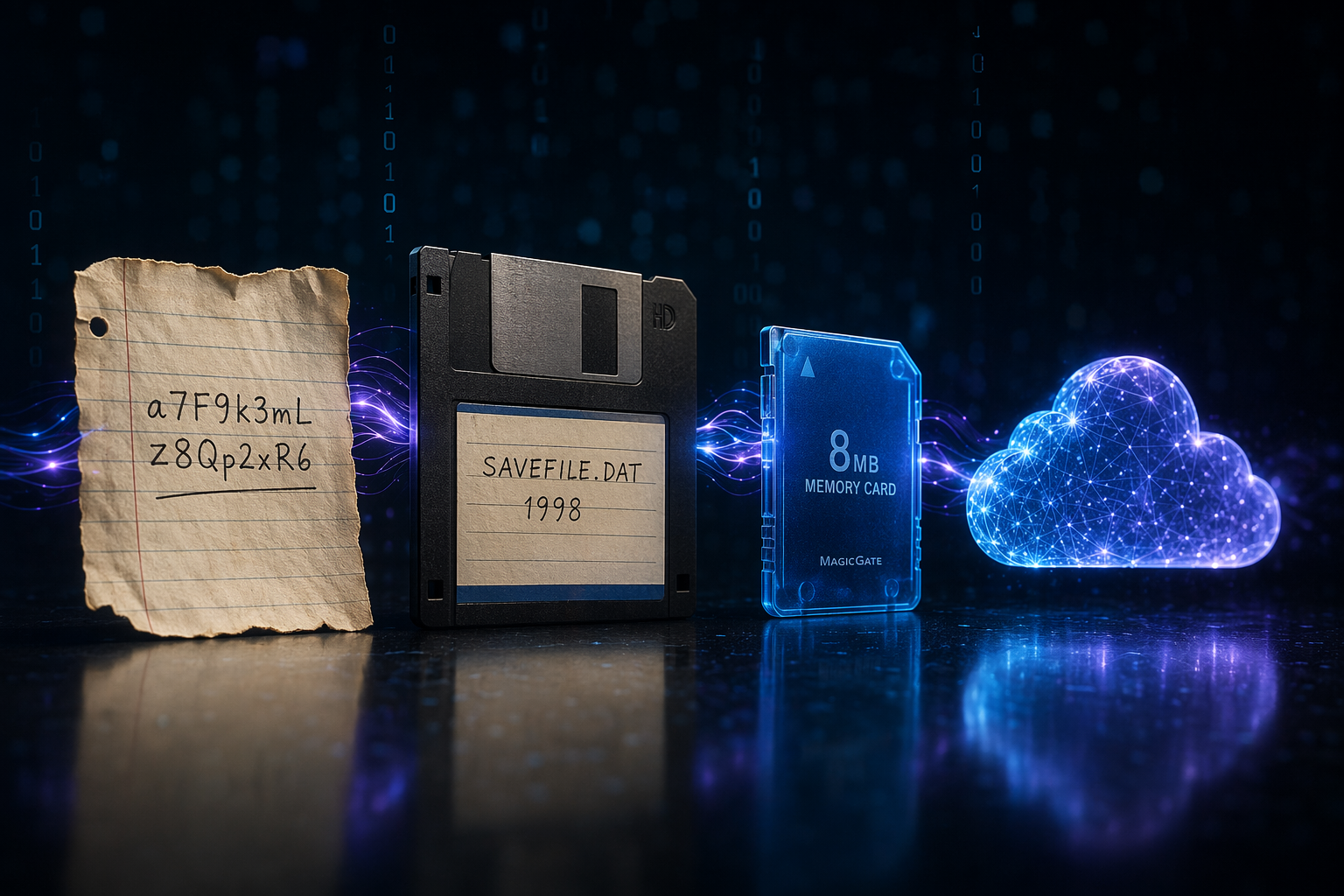
History of Save Systems
From passwords on napkins to invisible cloud synchronization.
The Password Era
Before writable storage was affordable, games gave players alphanumeric codes to resume progress. Players scribbled passwords on paper, shared them in schoolyards, and sometimes entered them wrong — losing hours of progress to a misread character.
Battery-Backed RAM
The Legend of Zelda changed everything with battery-backed save RAM in the cartridge. For the first time, your adventure persisted without codes. The downside? Batteries die. Countless save files were lost to time.
Memory Cards
PlayStation's memory cards made saves portable and personal. You could bring your save to a friend's house. But with limited blocks, players faced agonizing choices about which saves to keep and which to sacrifice.
Hard Drive & Autosave
With built-in hard drives, saves became invisible. Autosave removed the burden of remembering to save. Checkpoints replaced save points. The player's responsibility shifted to the system.
Cloud Saves
Steam Cloud, PlayStation Plus, Xbox Live — your saves now follow you across devices. Switch from PC to laptop seamlessly. The save file became invisible, eternal, and device-agnostic.
Anti-Save Design
Some modern games deliberately restrict saving. Roguelikes delete your save on death. Dark Souls autosaves constantly to prevent save-scumming. The absence of saving became a mechanic itself.
🎯 Key Insight
Save systems reflect our changing relationship with digital permanence. Early saves were precious and fragile. Modern saves are invisible and infinite. But the most innovative designers now ask: what if losing progress is the point?